Cyclone Narelle Threatens Already-Flooded Rural Communities Across Australia’s North
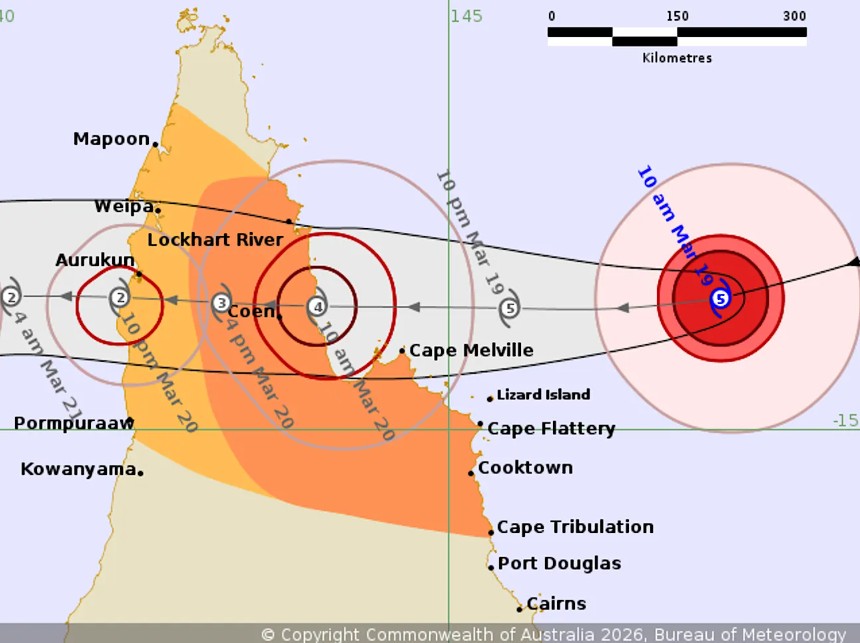
Rural Aid is encouraging primary producers across Far North Queensland, the Northern Territory and the Kimberley region of Western Australia to take urgent precautions and seek support as Tropical Cyclone Narelle tracks towards northern Australia.
The developing system is expected to intensify into a category 5 cyclone and bring heavy rainfall, destructive winds and potential flooding – conditions that can have devastating and long-lasting impacts on agricultural operations across the north.
Far North Queensland’s agricultural sector, one of Australia’s most significant tropical food bowls, is particularly vulnerable. The region produces a substantial share of the nation’s sugarcane, bananas, mangoes and avocados, alongside a strong seafood industry and large beef grazing operations. Cyclonic conditions can isolate livestock, flatten crops, strip fruit from trees, inundate low-lying cane fields, and disrupt harvesting at critical times in the season.
Northern Australia already saturated
Across much of northern Australia, producers are already dealing with widespread flooding and early-season cyclone activity, with successive rain events leaving large areas saturated and difficult to access.
Rural Aid Chief Executive Officer John Warlters said another significant system could place enormous strain on already stretched operations.
“This isn’t a one-off event, many of these producers are already dealing with flood-affected country and limited access,” Mr Warlters said.
“Another round of heavy rain and strong winds doesn’t just add to the damage, it compounds it. It increases the risk of stock losses, puts more pressure on infrastructure, and makes an already difficult situation even harder to manage.”
Additional rainfall threatens to isolate vast cattle properties for days or even weeks, with flooded paddocks and washed-out roads making it difficult to move livestock, access feed, or bring in essential supplies. Damage to fencing, yards and water infrastructure can further slow recovery, particularly across remote operations where repairs take time.
Power and fuel pressures escalate as Cyclone Narelle approaches
Power reliability is a critical concern for farming families facing Tropical Cyclone Narelle. Extended outages during the storm can force producers to rely on generators to keep their homes, water pumps, and other essential infrastructure running. With fuel in high demand, expensive, and proving difficult to source in remote areas, maintaining these systems during a disaster has become increasingly challenging.
Mr Warlters said the approaching cyclone amplifies these risks.
“Even short-term power outages during a cyclone can have serious consequences for livestock and water supplies,” Mr Warlters said.
“With the fuel getting ever more scarce or expensive, running generators becomes not just expensive but difficult to sustain. This makes an already dangerous and stressful situation even harder for producers trying to keep their properties operational and their families and animals safe.”
Rural Aid support services for farmers
Mr Warlters said Rural Aid is ready to support farmers at every stage of the event and is encouraging anyone at risk or impacted to get in touch early.
Rural Aid Chief Executive Officer John Warlters said cyclones can leave a lasting mark on farming communities well beyond the initial impact.
“Cyclones don’t just pass through and leave – it’s the aftermath that can be incredibly tough for farmers,” Mr Warlters said.
“You’re looking at damaged crops, displaced livestock, destroyed infrastructure and, in many cases, weeks or months of recovery. For many producers, it can be both financially and emotionally overwhelming.”
“Our message is simple – don’t wait until things get too difficult. If you’re in the path of this system or dealing with the impacts, reach out to us. We’re here to help ease some of that pressure.”
Rural Aid provides a range of practical and wellbeing support services for farmers at no cost, including:
- Financial assistance to help cover urgent or unexpected costs
- Counselling and mental health support for farmers and their families
- Emergency hay deliveries to support livestock
- Water deliveries for essential household use
- On-ground help through the Farm Army and Farm Recovery Event programs, assisting with clean-up and rebuilding
The organisation is also encouraging Australians to support farming communities likely to be impacted, with donations helping to deliver critical assistance when and where it is needed most.
“Farmers in these regions are no strangers to tough conditions, but cyclones of this intensity can push even the strongest operations to their limits,” Mr Warlters said.
“Backing them during times like this is essential, not just for those families, but for the future of Australia’s food and fibre supply.”
Farmers seeking support can call 1300 327 624 or visit www.ruralaid.org.au. Rural Aid is ready to help.
About Rural Aid:
Rural Aid is Australia’s leading charity supporting farmers, their families and rural communities. We deliver practical assistance during drought, fire, flood and other disasters, helping farming families stay on the land and protect their livelihoods. Through disaster relief, mental health support and community development programs, Rural Aid works with partners, supporters and volunteers to strengthen rural communities and ensure farmers have the support they need to recover, rebuild and remain connected.
For media inquiries, please contact:
Daniel Brown
Media and Communications Officer
0447 116 757
daniel.brown@ruralaid.org.au