Growing Openness, Ongoing Strain: New Rural Aid Survey Reveals State of Farmer Wellbeing
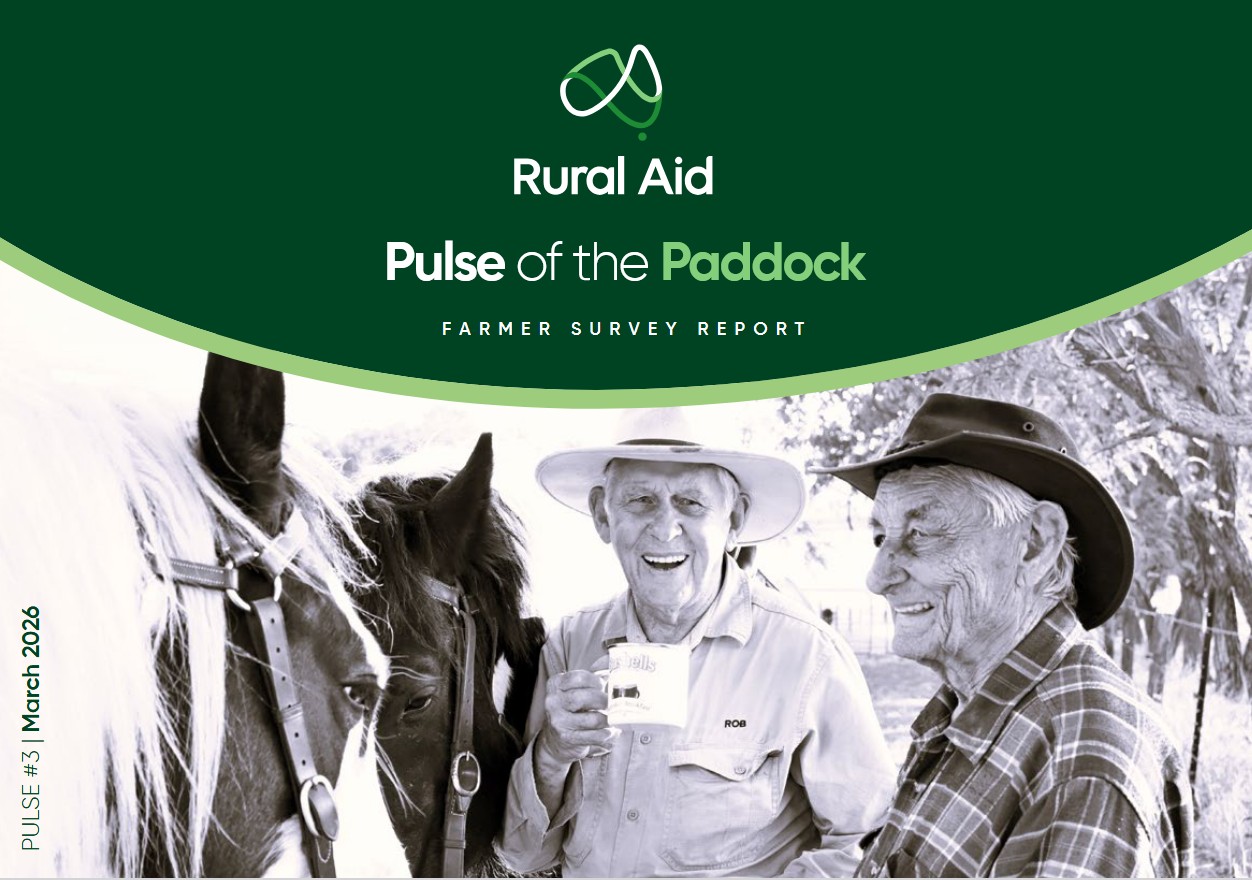
Rural Aid has released the third annual Pulse of the Paddock farmer survey report, offering a candid snapshot of how Australian farmers are navigating mental health, uncertainty and the realities of life on the land.
Based on the experiences of nearly 1,400 farmers surveyed during October and November 2025, the report shows a clear cultural shift. Farmers are increasingly recognising that wellbeing is fundamental to the sustainability of their farms and families. Conversations around mental health are becoming more open, and more farmers say they would reach out for professional support if needed.
However, the findings also reveal that more farmers reported a decline in their mental health over the past 12 months than an improvement.
The findings show that while conversations about mental health are becoming more common, the underlying pressures facing farming families remain persistent and complex. Financial strain and climate uncertainty are not short-term disruptions – they are structural realities shaping daily life and long-term decision-making on farms across the country.
Awareness is growing, but awareness alone does not ease cumulative stress. For many families, the strain is layered and ongoing.
Rural Aid Chief Executive Officer John Warlters said the results reflect both progress and sustained pressure across the sector.
“We are seeing real change in how farmers talk about mental health. There is greater openness and a stronger willingness to seek support,” Mr Warlters said.
“But the pressures they are facing are significant and ongoing. Drought, rising costs and uncertainty don’t switch off at the end of a season. They compound over time, and that takes a toll.”
The report also highlights the broader impact on families. Many farmers expressed concern about their children’s futures, including financial stability, access to education and long-term employment opportunities. Mental health challenges are not experienced in isolation – they affect entire households and influence decisions about the future of the farm.
Community remains a cornerstone of rural life and farmer wellbeing. Farmers consistently describe local networks as essential during difficult seasons, providing practical support and shared understanding. However, connection is not guaranteed. Distance, service gaps and ongoing pressure are placing strain on local networks, reinforcing the need for accessible and trusted support.
Mr Warlters said timely assistance can ease both practical and emotional strain.
“Practical help matters, but just as important is knowing someone understands the realities of farming life,” he said.
“No farmer should feel they have to carry that weight alone.”
Rural Aid is encouraging any farmer or farming family experiencing stress or hardship to seek support early. Farmers seeking assistance can call Rural Aid’s confidential counselling intake line on 1300 175 594.
To donate and stand with farming families, visit www.everystep.ruralaid.org.au.
“Reaching out is a practical step,” Mr Warlters said.
“If you need support, call 1300 175 594. If you’re able to help, your donation ensures we can continue standing alongside Australia’s farming families when it matters most.”
View the full report here
About Rural Aid:
Rural Aid is Australia’s leading charity supporting farmers, their families and rural communities. We deliver practical assistance during drought, fire, flood and other disasters, helping farming families stay on the land and protect their livelihoods. Through disaster relief, mental health support and community development programs, Rural Aid works with partners, supporters and volunteers to strengthen rural communities and ensure farmers have the support they need to recover, rebuild and remain connected.
For media inquiries, please contact:
Daniel Brown
Media and Communications Officer
0447 116 757
daniel.brown@ruralaid.org.au